

Every people believe that best English communication request costly classes, glossy textbooks or an foreign accent they have never encountered. Anyone who has genuinely worked on English soon sees the reality – steady habits, regular practice and a clear sense of what suits the learner produce almost all the progress.
Whether someone is a student trying to speak English confidently during college presentations, a working professional preparing for interviews, or a job seeker who simply wants to speak English fluently in everyday life, one thing is the same: improving English speaking skills is totally possible with the right plan.
This guide breaks everything down in a simple, real-life, friendly way, using tips that actually work. No complicated theory. No robotic textbook advice. Just natural methods people use every day to improve spoken English and build confidence.
Let’s get into it.
Table of Contents
What English Communication Skills Really Mean
Most people think English communication skills only mean speaking fluently, but that’s only part of the deal. Good communication means a mix of:
- English speaking skills
- English listening skills
- Proper pronunciation
- Vocabulary improvement
- English conversation practice
- Grammar basics
- Confidence in speaking English
- Ability to speak naturally and not sound stiff
When someone clearly follows these steps, then they start speaking English fluently without thinking too much.
Why Most People Struggle With English (Even After Learning For Years)

Here’s the funny part. Now most of us would claim: “I can read English, I can write English, but when I speak. I’ve lost my words.”
This is normal. Every woman experiences this.
Most individuals face difficulties because:
- They learned English from books, not from conversations.
- They never practiced English speaking daily.
- They fear judgment while speaking English in front of others.
- They don’t know useful methods for English fluency improvement.
Once these barriers break, communication skills in English get better super fast.
How to Improve English Speaking Skills (Step-by-Step Instructions)
Job seekers, travellers and staff use the following methods to speak English well. Each technique has been tested plus proves effective at every level.

1. Speak English daily
Even if you manage only ten minutes. Fluency does not demand hour long sessions. Ten minutes of talk each day helps more than a long session saved for the weekend. A person:
- Talking to themselves in English
- Recording voice notes
- Reading English aloud
- Practicing English conversation with a friend
- Speaking English during small daily tasks
Daily English practice builds muscle memory—yes, speaking is a muscle skill too.
2. Learn English by Listening First
English listening skills play a big role in fluency. Most people who speak English confidently didn’t start by speaking—they started by listening.
A person can listen to:
- English podcasts
- Movies
- YouTube interviews
- TED Talks
- English storytelling channels
The aim definitely doesn’t lie in learning each and every word. But one needs to listen to how English sounds while being spoken. How voices go up and down. How speech moves. How phrases seem natural.
3. Better English Vocabulary Without Learning Lists
Committing 20 random words daily would be futile. People forget them instantly.
Instead, something simple works better:
- Learn 3–5 new words from real situations
- Use those words in multiple sentences
- Repeat them in conversations
- Practice them in writing
This is vocabulary improvement the natural way.
For example, instead of memorizing “articulate”, learn it while watching a video where someone explains something clearly.
4. Practice English Conversation in Real-Life Situations
The easiest way to improvised spoken English is to speak it in real time.
Everyday English vary sharply from textbook English – it is lighten, brief and packed with contractions.
Speakers say
“I’m gonna go.”
“You wanna try?”
“Let us figure it out.”
A learner who knows only formal English often freezes in real talk because that learner expects perfect grammar from everyone else.
Regular conversation with classmates, coworkers, teachers, friends or online partners builds natural English communication skills.
5. Learn English Grammar Basics (Not Everything)
Good English communication skills don’t require perfect grammar. They require basic grammar that helps form clear sentences.
A person needs to know:
- Tenses
- Articles
- Prepositions
- Sentence structure
- Common errors
Once this foundation is strong, fluency in English speaking becomes way easier.
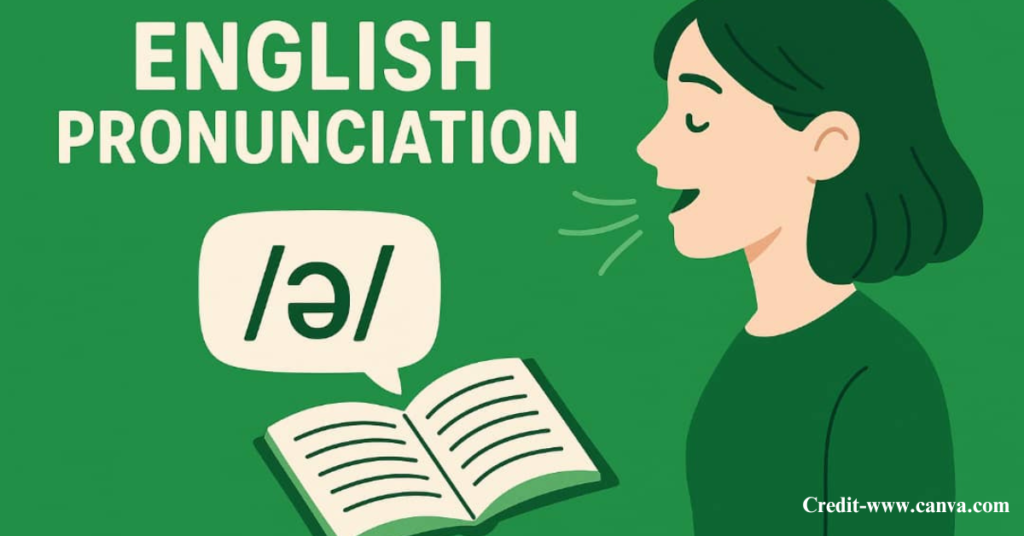

6. Work on Pronunciation With Simple Techniques
To pronounce best, you don’t need to mimic a foreign accent. You only focus to
– Speak every word with clarity
– Shape your mouth correctly
– Speak at a slower pace
– Split difficult words into syllables
Example
“Responsibility” becomes res-pon-si-bi-li-ty
You may practise with an app, a YouTube channel or – speaking to your reflection.
7. Use English Speaking Apps and Online Tools
Many learners improve English communication faster when they use interactive tools.
Some popular ones include:
- Google’s pronunciation tool
- Duolingo
- Elsa Speak
- BBC Learning English
- British Council website
These tools help with spoken English practice, vocabulary improvement, and accent clarity.
8. Read English Every Day (But Read Smart)
Reading improves fluency without even realizing it. But reading a boring textbook won’t help.
Instead, one can read:
- English blogs
- News articles
- Storybooks
- Magazines
- English conversations online
- Social media captions
Reading helps people pick up natural expressions like:
- “By the way”
- “At the end of the day”
- “To be honest”
These make communication smoother.
9. Think in English Instead of Translating
This is the biggest reason people get stuck while speaking English. They try to translate every sentence from their mother tongue.
A quick fix?
Think in English.
For example:
Instead of thinking, “Mujhe paani chahiye… how say in English?”
Say: “I need water.”
Thinking in English eliminates half of the hesitation pauses.
10. English Conversation Classes (Offline & Online Options)
This is because learners obtain faster language skills in English when practicing with others in a group composed of learners who have similar levels.
Conversation clubs help with:
- Confidence
- Pronunciation
- Vocabulary
- Spontaneous speaking
- Social interaction
The goal is not to speak perfect English. The goal is to speak often.
Use English in Real Life Without Overthinking

Real growth happens outside the practice zone.
A person should start using English in daily life:
- Ordering food
- Talking to customer support
- Asking for directions
- Emailing in English
- Writing notes or reminders
- Chatting online in English
Small actions create big improvements.
Build English Learning Habits That Stick

Consistency matters more than perfection.
A person can try:
- 10 minutes of daily reading
- 10 minutes of listening practice
- 10 minutes of speaking practice
These small habits create strong English communication skills in a few months.
FAQs
1. How extensive does it take to better English communication skills?
If you reharse every day, most people notice progress within four to eight weeks. Full fluency needs more time – yet confidence rises fast.
2. Is it possible to improve English without grammar?
Yes. A little grammar is useful – yet clear speech relies mainly on talking and listening.
3. What is the best way to speak English perfectly?
Practise spoken English daily. Listen to perfect speakers. Learn everyday wording. Think in English.
4. How should a beginner start to improve English?
Listen to simple English. Learn basic words. Use short sentences. Speak without fear.
5. Do English communication apps really help?
Yes. They support pronunciation speaking practice and vocabulary growth.
Final Thoughts
Better English communication does not demand flawless speech – it demands steady practice, fixed routine and contact with English every day. Any person who keeps to simple habits, joins real talks plus refuses to fear errors will speak with confidence. English works like any other skill – the more a person uses it, the more ability grows.