
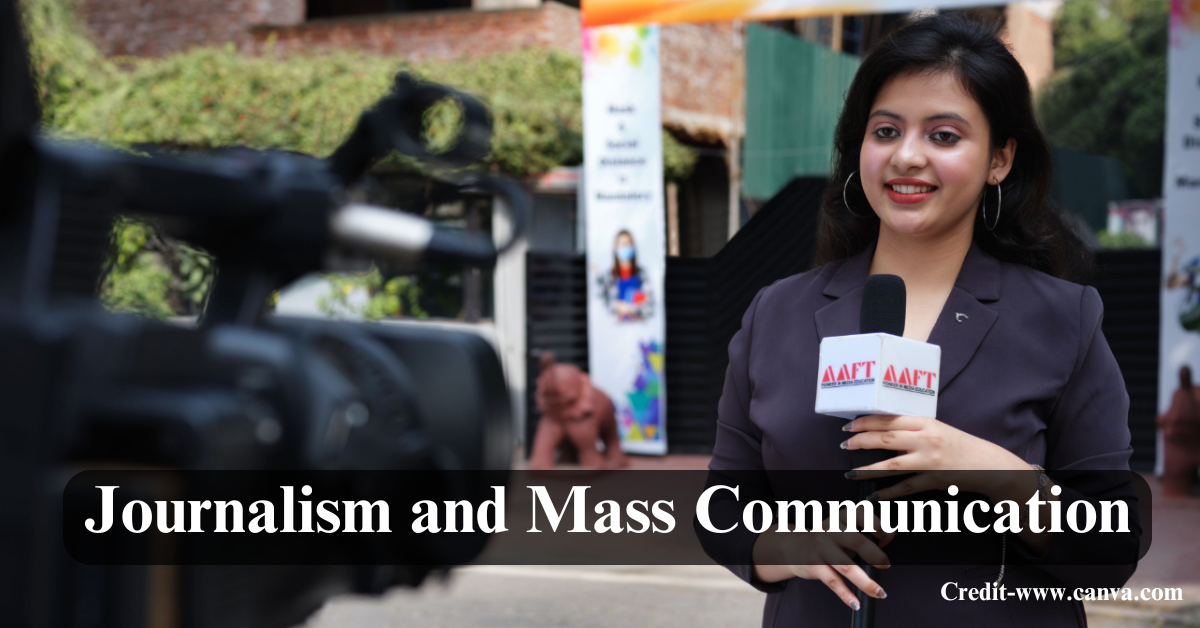
A person who loves to ask questions, tell stories, focus what is popular on social media or describe further events to others already feels the journalism and mass communication. News now moves faster than ever, every screen carries content plus communication guides opinion every day. On that account journalism and mass communication has become one of the most lively but also adaptable career paths in India.
The field reaches far past newspapers and television studios – it now covers digital media, social platforms, public relations, advertising, podcasts, video journalism and brand storytelling. The following sections explain in plain order what the field is, which courses exist, who qualifies, which subjects appear, which career paths open, which jobs emerge, what salaries follow as well as whether journalism and mass communication remain a sound career choice from 2025 onward.
Table of Contents
What Is Journalism besides Mass Communication?

Journalism and mass communication is a wide area of study plus work that gathers facts, turns them into stories and delivers those stories to many people at once by means like newspapers, radio, television, websites or phone apps.
Journalism centres on finding news checking it writing it editing it but also finally placing it before the public. Mass communication looks at the way any message travels to a crowd. That includes advertising, public relations, films, television programmes, radio shows, digital outlets and social platforms.
Taken side by side, those subjects train students for jobs in newsrooms, media businesses, company communication teams, digital outlets as well as any role that faces the public. A person who asks how a news item is born, how a brand talks to buyers or how public feeling forms will find the answers here.
Journalism vs Mass Communication: What’s the Difference?

Many students mix the two terms – here is a plain distinction.
Aspect Journalism Mass Communication
Focus News and facts Messages, media, and audiences
Work Type Reporting, editing, investigation Advertising, PR, media planning
Platforms Newspapers, TV news, online news TV, radio, social media, films
Nature Information-driven Strategy and communication-driven
Journalism is mostly the craft of putting hard questions to people and writing down what is true. Mass communication examines how a story, a product name or an idea travels to the public.
Why choose journalism and mass communication as a career?

The media industry has altered beyond recognition during the past ten years. Radio plus television still carry weight – yet digital platforms have redrawn the map of how information reaches people.
Students now head toward this path for five plain reasons. News sites, YouTube outlets and social media accounts expand at speed. Every brand now hires content writers, media planners but also public-relations staff. Digital media invents posts that had no name a few years ago. Fourth freelancing and remote contracts have become normal. Employers still pay for clear thought as well as fresh ideas.
Anyone who enjoys different and who does not want to sit at the same desk forever will find elasticity here. On Monday the same person may draft a news report – on Tuesday the person designs a campaign – on Wednesday the person curates a website.
Journalism and Mass Communication Course Details

India offers journalism and mass communication study at three separate stages.
Types of Courses
A student may begin with a one year diploma. A three year bachelor’s degree follows, either as BJMC or BA Journalism besides Mass Communication. Those who wish to continue may complete a two year master’s degree, listed as MJMC or MA Journalism or Mass Communication.
Course Duration
Diploma work not long from six months to one full year. The bachelor’s degree sheltre three academic years. The master’s degree needs two academic years.
Every level balances classroom theory with direct practice. Students write news stories, edit copy, shoot and cut video, complete internships plus finish assigned projects.
Journalism and Mass Communication Eligibility

Eligibility depends on the level of the course.
For a bachelor’s degree – the applicant must have passed 10+2 in any stream – Arts, Commerce or Science.
For a master’s degree – the applicant must hold a bachelor’s degree from a university that the country recognises.
Some colleges run their own entrance exams, interviews or aptitude tests – they pay more attention to English skill, general awareness and the ability to communicate than to the exact percentage of marks.
Journalism and Mass Communication Subjects

The journalism and mass communication syllabus usually covers a mix of theory and practical learning.
Common journalism and mass communication subjects include:
- News reporting and writing
- Editing and feature writing
- Media laws and ethics
- Advertising and public relations
- Digital media and online journalism
- Television and radio production
- Film studies and media research
These subjects help students understand both content creation and media operations.
Skills Needed for Journalism and Mass Communication
Degrees help, but skills decide success in this field. Employers care about what a person can actually do.
Important skills include:
- Strong communication and writing skills
- Curiosity and critical thinking
- Research and fact-checking ability
- Confidence while speaking
- Digital media and social media skills
- Time management and adaptability
Anyone who wants to stay in journalism or mass communication for decades has to go on studying – the media climate shifts within months.
Career Scope in Journalism and Mass Communication
India’s appetite for journalism and mass communication keeps widening. Media now sits in every corner of life – television news, OTT screens, social networks, start up offices, government information units and corporate brand studios.
Major fields of work are:
- Print media
- Electronic media (TV and radio)
- Digital media and online platforms
- Advertising agencies
- Public relations firms
- Corporate communication departments
This wide scope allows students to switch roles even after starting their careers.
Jobs After Journalism and Mass Communication

There are many jobs after journalism and mass communication, depending on skills and interests.
Popular journalism and mass communication jobs include:
- Journalist
- News reporter
- Content writer
- News editor
- Broadcast journalist
- Social media manager
- Public relations executive
- Media planner
- Digital content creator
People take three broad paths after they finish their courses. Some accept staff jobs with television or web news channels. Others sign on with newspapers, magazines or news agencies. The rest work for themselves, either – selling individual stories or – turning their own name into a recognisable online brand.
Journalism and mass communication salary in India
What a person earns in this field depends on how long the person has worked, where the person works and the exact title the person holds.
New entrants usually receive between fifteen plus thirty thousand rupees a month. After about five years, pay moves to the forty-to-seventy-thousand band. Veterans who have spent ten or more years in the industry normally clear one lakh rupees a month.
Positions that deal purely with digital products tend to move up the pay ladder faster than posts that serve print titles. A freelancer’s income is set by the number of commissions the freelancer wins and by the professional standing the freelancer has built.
Best Colleges for Journalism and Mass Communication in India
India has a broad radius of government and private colleges that learned journalism and mass communication. Before they apply, students ought to read the exact subjects that will be studied, find out who will teach them, learn where internships are arranged plus discover how often professionals from newsrooms, television studios advertising agencies and public-relations firms visit the campus. The choice of college decides the quality of lessons a student receives but also the contacts the student builds with working reporters, editors, producers and corporate communication managers.
Is Journalism besides Mass Communication a Good Career?
Students frequently ask whether journalism as well as mass communication offer a worthwhile career. The plain answer is yes, provided the person’s interests match the demands of the profession.This field rewards:
- Passion
- Curiosity
- Hard work
- Adaptability
It may not offer instant high salaries, but it provides long-term growth, exposure, and diverse career paths. People who enjoy communication and storytelling usually do well here.
FAQs
What jobs are open after a journalism and mass communication degree?
Graduates find posts in newsrooms, on digital news sites, in public relations offices, in advertising agencies plus in the communication departments of companies.
Must I study mathematics to enter the programme?
Mathematics is not a essental subject for admission to most journalism and mass communication courses.
Can science students choose this field?
Students from any academic background – science, commerce or arts – are eligible to enrol.
Is journalism a dangerous career?
Every creative profession brings pressures but also uncertainties. Building strong reporting skills and learning digital tools lower the dangers.
What lies ahead for journalism as well as mass communication?
Audiences continue to move toward digital outlets, podcasts and online video – this steady shift points to sustained demand for trained communicators.
Final Thought
Journalism and mass communication have moved beyond the old image of people typing in newsrooms plus papers rolling off presses. Today the work covers every kind of message – the tale that holds attention, the brand that builds trust, the view that starts debate, the fact that helps a stranger decide.
Students who like to find things out, put thoughts into words, pictures or sound and check what is happening in the world will find that this field gives room to move, room to invent but also the chance to change something outside their own desk.
Anyone willing to sweat, to keep learning and to shift when the world shifts can turn simple curiosity into work that matters.