

People who hear the words “assessment for learning” often think it is just another high sounding school term that hides something dull. Yet when teachers put assessment for learning – AfL – into practice, classrooms shift. Pupils see what they are meant to do, teachers no longer guess what pupils think plus lessons run in a clearer order.
This guide spells out what AfL is, why it counts and how teachers can apply it without stress. It also covers the errors that schools repeat again but also again, shows how pupils can take real charge of their own assessment and explains how AfL succeeds in large, crowded rooms.
Let’s dive in.
Table of Contents
What Is Assessment for Learning?

Assessment for learning (AfL) is a method that shows where students stand in their learning – teachers use the result to steer their next steps. Picture it as the teacher’s live map. Instead of waiting for a final exam to discover that students lost track weeks earlier, AfL sends early warnings.
Summative assessments judge learning once it is finished – AfL keeps its eyes on the trip. It lets teachers detect errors, find gaps and see gains before trouble grows.
At its core, assessment for learning includes:
- Clear learning goals and success criteria
- Continuous assessment
- Useful feedback
- Self-assessment and peer assessment
- Evidence-based teaching decisions
This isn’t limited to schools. Tutors, trainers, and even workplace learning teams use AfL to improve learning outcomes and engagement.
Why Assessment for Learning Matters
Teachers often say they don’t have enough time to reteach topics. AfL solves that problem by catching issues early. When a teacher uses it well, the classroom becomes more predictable, and students feel more confident.
Here’s why AfL matters:
1. It reduces guesswork
Without continuous assessment or feedback for learning, teachers often rely on instinct, which isn’t always reliable. AfL provides evidence of learning, helping teachers make better instructional decisions.
2. It improves student progress
Students who know what they must learn, how they will be judged and what a strong piece of work looks like lean to achieve more. They do more than finish the task – they grasp its purpose.
3.It lifts student engagement
When students judge their own work or the work of a classmate learning stops feeling like an event that happens to them. They step into an active role.
4.It turns feedback into something useful
AfL promotes comments that move the learner forward, instead of vague praise like “good job” or vague criticism like “needs improvement.” Clear feedback states what the student did, what is missing and what to do next.
5.It improves teaching choices
While the lesson unfolds, the teacher watches evidence of learning and accquire the next step on the spot. This prevents the class from drifting behind.
Key Principles for Effective Assessment of Learning New
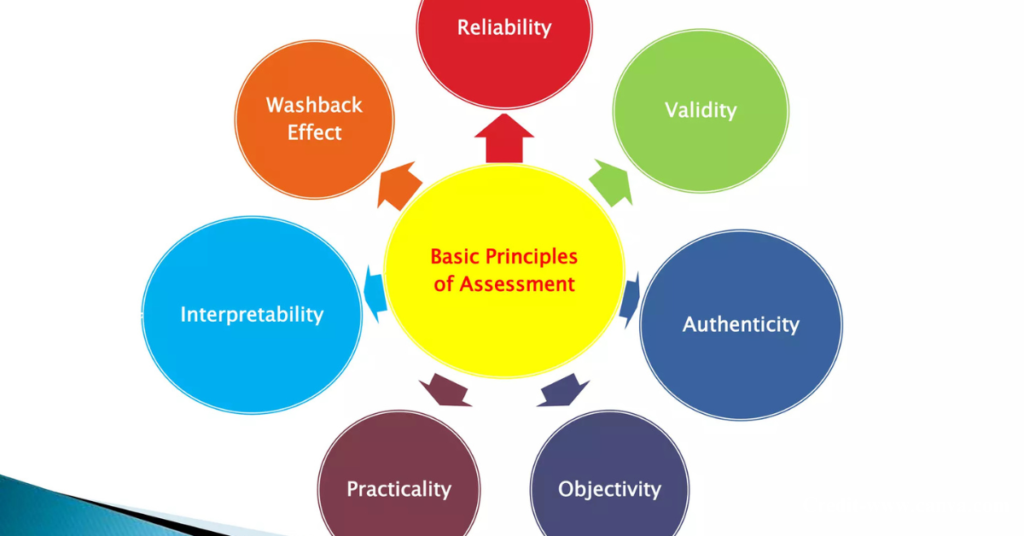
Rival articles list those principles but seldom show how each one functions. Here’s a straightforward list that blends classroom reality with best practices:
- Clear learning goals
Every lesson should start with students understanding the learning goal. This gives them a sense of direction.
- Success criteria
Students need to know what “good work” looks like before they start. This reduces confusion and supports self-assessment.
- Evidence-based checks
This can be short quizzes, quick questions, exit tickets, whiteboard responses, or even simple conversations. The aim is to gather evidence of learning during the lesson.
- Immediate feedback
Feedback works best when it’s timely. AfL encourages clear, simple feedback that tells students what to improve.
- Student involvement
Self-assessment and peer assessment help students understand their own learning. Competitors often mention this but they rarely explain how to give those assessments real meaning.
- Continuous improvement
AfL isn’t an activity; it’s a cycle:
Teach → Check → Give feedback → Adjust → Teach again → Check again
Assessment for Learning vs Other Types of Assessment

Many learners mix up two kinds of tests – the kind that is meant to help them while they are still learning and the kind that is meant to judge what they have already learned. The first is called formative or “assessment for learning”; the second is summative or “assessment of learning.” Let us spell out the difference.
Assessment for Learning (AfL)
- Happens during the learning
- Guides teaching
- Uses feedback
- Shows student progress
- Helps students understand their work
- Uses short, regular checks
Assessment of Learning (AoL)
- Happens after learning
- Measures achievement
- Usually graded
- Used for reports, comparisons, certifications
Diagnostic Assessment
- Happens before learning
- Identifies learning needs
- Helps plan lessons
- Examples: pre-tests, prior knowledge questions
Comparative Table
Type of Assessment | Purpose | When It Happens | Examples |
Assessment for Learning | Improve learning | During | Exit tickets, questioning, peer assessment |
Assessment of Learning | Measure results | After | Exams, projects, final tests |
Diagnostic Assessment | Identify needs | Before | Pre-tests, readiness checks |
Practical Assessment for Learning Strategies Teachers Can Use Now

Those AfL strategies work in real classrooms, no matter if the space is large, small, busy, noisy or anything else.
1. Exit tickets
When the lesson ends, each student writes the single most important idea learned or one point that still confuses. The teacher gains immediate evidence about what pupils grasp or still need.
2. Think-pair-share
The pupil first thinks alone, then talks with one partner, then tells the class – this sequence lets pupils explain ideas and correct misunderstandings.
3. Mini whiteboard checks
The teacher poses one question – every pupil writes the answer on a small board and holds it up. The method is quick, simple plus highly effective. This shows immediate understanding.
4. Success criteria checklists
Students compare their work with clear criteria. This supports self-assessment and promotes independence.
5. Peer assessment with sentence starters
Instead of vague comments, use starters like:
“You did well in…”
“One thing you can improve is…”
“Your next step is…”
6. Low-stakes quizzes
These quizzes help students recall information without pressure. They also help teachers see what needs reteaching.
7. Feedback that moves learning forward
Good feedback is:
Simple
Clear
Actionable
Timely
Avoid comments like “try harder”; focus on what to change.
9. Learning journals
Students reflect on how they solved problems, what helped them, and what confused them. This builds self-awareness.
How to Build Assessment for Learning Into Daily Lessons
If a teacher wants AfL to run smoothly every day, follow this plain sequence
1. Pick one method
Do not launch every tool right away. Start with exit tickets or short quizzes.
2. State the lesson goal in clear words
Explain what pupils will learn and why the knowledge matters.
3. Show what success looks like
Display strong examples of finished work. Pupils gain a clear model to copy.
4. Check grasp of the content often
Keep the checks brief yet purposeful.
5. Offer plain exact feedback
Name what is right, what needs fixing and the next step.
6. Let pupils take part
Train them in a few easy self assessment moves:
- Check criteria
- Compare with models
Identify one improvement
7. Review your own practice
Ask yourself:
- Did students understand the goal?
- Did the feedback help?
- Did I adjust instruction based on evidence?
FAQs
Is assessment for learning as same as formative assessment?
Yes. Both clauses refer to checks take out while learning is under way so that teaching can be adjusted.
Can a summative test serve assessment for learning?
Provided the outcomes shape the next steps in teaching. If they do not the test keeps its summative purpose.
Does assessment for learning suit large classes?
Yes. Mini whiteboards exit tickets and peer assessment all function when many pupils are present.
How often should assessment for learning occur?
It should feature in every lesson, even if only through brief, swift techniques.
Must pupils receive training to judge their own work?
Yes. Teachers need to supply clear examples, demonstrate the process and give continued support.
Final Thought
Assessment for learning is not a passing fashion – it is a method that has shown its worth – it shows each learner the present position, the strong points and the next steps. When a teacher applies AfL in every lesson, the teacher sees progress clearly, chooses teaching moves with confidence plus creates a room in which learning is secure.
The method does not demand elaborate instruments or extra hours – it needs four things only – transparent targets, feedback that tells the learner what to do next, quick checks that reveal who understands and learners who take part in judging their own work. When those four elements operate together, every student sees a clear path but also believes that success lies within reach.