
Anyone who finishes graduation in India knows the same story. One month you’re enjoying the relief of final exams being over, and the following month your relatives suddenly turn into HR managers asking, “So, what’s next?”
Most fresh graduates start looking for private jobs, but the problem is simple: private companies sometimes offer low pay, high pressure, irregular work hours, and zero job security. So many graduates turn toward government exams after graduation, and honestly, it makes sense. Stable pay, fixed timings, holidays, and long-term growth — it’s a dream for a lot of people.
But the big question is: Which government exams can anyone take after graduation? There are so many options that it can muddle even the most brilliant student. Here’s a clear, simple, and helpful guide to help any graduate find the proper fix.
Table of Contents
What Makes Government Exams After Graduation So Popular?
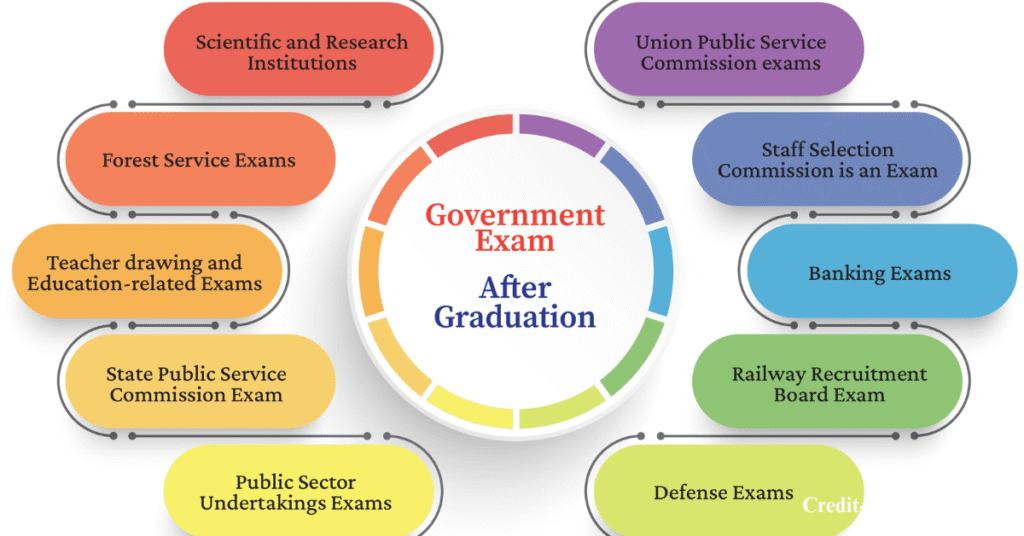
If someone looks at the number of students applying for government jobs after graduation, it becomes clear why the craze never ends. The reasons are pretty simple:
- Regular salary every month (no guessing games)
• Growth and promotions
• Pension and retirement safety
• Paid leaves and work-life balance
• Respect in society
• Strong long-term security
For someone just stepping into adult life, these points matter a lot. And when the job comes through one of the popular competitive exams after graduation, the chances of settling early increase..
Full List of Government Exams After Graduation
Here’s a full list of popular and important government exams for graduates that students across India often go for:
- UPSC Civil Services
• SSC CGL
• SSC CHSL (for some graduate-friendly posts)
• IBPS PO
• SBI PO
• IBPS Clerk
• Railway exams (RRB NTPC, RRB Group-B, Group-C roles)
• State PSC exams
• CDS exam
• AFCAT exam
• PSU recruitment exams
• LIC AAO
• FCI exams
• EPFO SSA / EO
• Delhi Police / State Police Sub-Inspector exams
• Teaching and education-body exams
• NABARD Grade-A / Grade-B (for eligible graduates)
• ESIC exams
This gives someone a wide range of exams for graduates — whether they want banking, defence, railway, teaching, or top-level officer work.
Govt Exams After Graduation by Stream

Some exams accept graduates from any stream, while some want specific backgrounds. So here’s a clear stream-wise guide.
For Arts Graduates
Arts students often worry that they have fewer options, but honestly, they actually have some of the best options:
- UPSC Civil Services
• SSC CGL
• SSC CHSL (where eligible)
• State PSC
• Banking exams (IBPS PO, IBPS Clerk, SBI PO)
• Railway exams
• Teaching-related exams
• Defence exams (CDS non-technical posts)
Most of these government exams for graduates don’t ask for specific maths or science knowledge.
For Commerce Graduates
Commerce students get a great mix of finance-friendly and general exams:
- IBPS PO / Clerk
• SBI PO
• SSC CGL (especially auditor / income-tax-related roles)
• PSU finance roles (for eligible candidates)
• State PSC
• RRB NTPC
• EPFO exams
• FCI exams
Commerce students naturally fit into banking and audit-related roles.
For Science Graduates
Science new students commonly get the widest set of options:
- All common exams (UPSC, SSC, Banking, State PSC)
• PSUs like ONGC, BHEL, GAIL (where allowed without GATE)
• Railway technical and non-technical roles
• Defence exams (technical and non-technical wings)
• NABARD / Regulatory-body exams (where eligible)
Science students can choose both technical and general exams.
Easy Government Exams After Graduation

Not every student wants to jump directly into the toughest-level exams. Some want something simple and straightforward.
Here are easy govt exams after graduation that fresh graduates often look for:
- IBPS Clerk
• RRB NTPC
• State-level clerical posts
Police constable tests (Some states admit candidates who passed class 12; degree holders also qualify.)
SSC MTS (This is not a graduate only test – yet graduates find it easy because the standard stays low.)
ESIC assistant grade tests
All three exams cover a short syllabus, face fewer applicants than UPSC or SSC CGL and declare results fast.
Well-paid government posts open to graduates
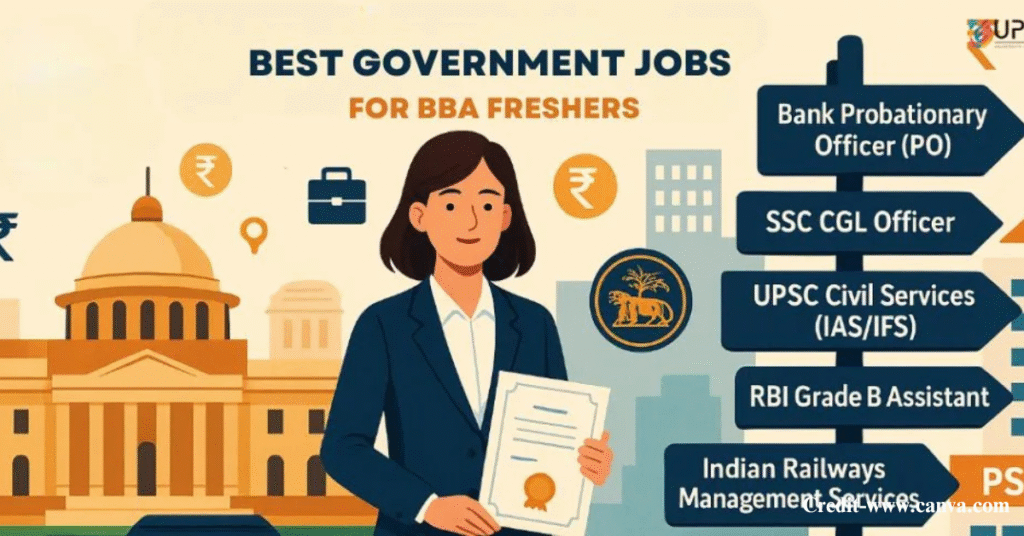
Some graduates look for secure work – others aim for senior posts that pay high salaries. The following examinations give entry to the best paid jobs in the civil service
- UPSC Civil Services (IAS, IPS, IFS)
SBI PO
IBPS PO
LIC AAO
NABARD Grade-A
RBI Assistant (graduate-friendly assistant-level role with high perks)
State PSC officer roles
PSU officer-level roles
These exams give strong career growth, big perks, and high respect.
How Fresh Graduates Can Choose the Right Govt Exam
This is where many websites fail — they tell students the list of exams but don’t explain how to choose.
Here’s a simple way to find the best fit:
- Check what subjects you are comfortable with.
Someone weak in maths may not like bank or railway exams. - Check how much time you can give.
UPSC needs 1–2 years of serious study. SSC CGL and banking need months. - Check job type and lifestyle you want.
Administrative? Desk job? Field job? Defence lifestyle? - Check long-term growth.
Some exams offer faster promotions than others. - Check posting and transfer rules.
Some jobs keep you in one state, some move you across India.
This helps graduates avoid wasting months behind exams that don’t match their interest or background.
Study Tips for Graduates Preparing for Govt Exams
Every graduate starts with confusion: Where to start? What to study? How to stay consistent?
Here’s a clear, simple set of tips:
- Start with basics
Focus on English, reasoning, and general knowledge. - Make a fixed routine
Even 3–4 hours daily is enough at the start. - Pick one exam at a time
Students fail when they try to prepare for everything. - Use mock tests
Mock tests help you understand timing and weakness areas. - Read daily news
Helps with general awareness, especially for UPSC, SSC, bank exams. - Stay patient
This journey needs time. Many students clear exams after multiple tries.
A consistent schedule is more useful than extreme study for a few days.
FAQs
Which government exams does every graduate qualify for?
A bachelor’s degree in any subject is enough for the following tests – UPSC civil services, SSC CGL, IBPS besides SBI bank exams, railway recruitment board tests, CDS and AFCAT defence entry, state public service commission exams, LIC AAO, EPFO, FCI and ESIC.
Which government jobs after graduation pay the most?
Top monthly pay comes with UPSC civil services, SBI Probationary Officer, LIC Assistant Administrative Officer, officer posts in public sector undertakings or NABARD Grade-A.
Which government exams are the least difficult for a graduate?
IBPS Clerk, RRB NTPC, SSC MTS also the clerical tests are done by single states, that’s why they need a shorter preparation time compared to UPSC or SSC CGL.
Does every government exam demand mathematics?
No. UPSC, multiple SSC posts, state PSC tests and most teaching exams avoid higher mathematics.
May an arts graduate sit for bank exams?
Yes. Banks treat every bachelor’s degree as valid, whatever the stream.
How much time does a candidate normally need to pass a government exam?
Bank or SSC entry level tests can be cleared in about three months of steady work, while UPSC usually needs one to two years.
Final Thought
Government exams after graduation offer new graduates a secure future, long term stability and clear career advancement. Options include bank posts, civil service roles, railway positions, defence work teaching jobs plus posts in public sector companies. The key is to match the choice to personal interests, personal strengths and the life one wants.
A new graduate who chooses the right exam, draws up a clear plan but also studies without interruption has every chance of landing a top government job.